Access
Reduce required downloads, confusing registration, and unnecessary steps between a person and useful information.

Current project · planned and under development
A church communication project focused on reducing the distance between information and participation for visitors, members, leaders, and volunteers.
This case study describes verified current context and planned work. It does not present planned capabilities as already live.
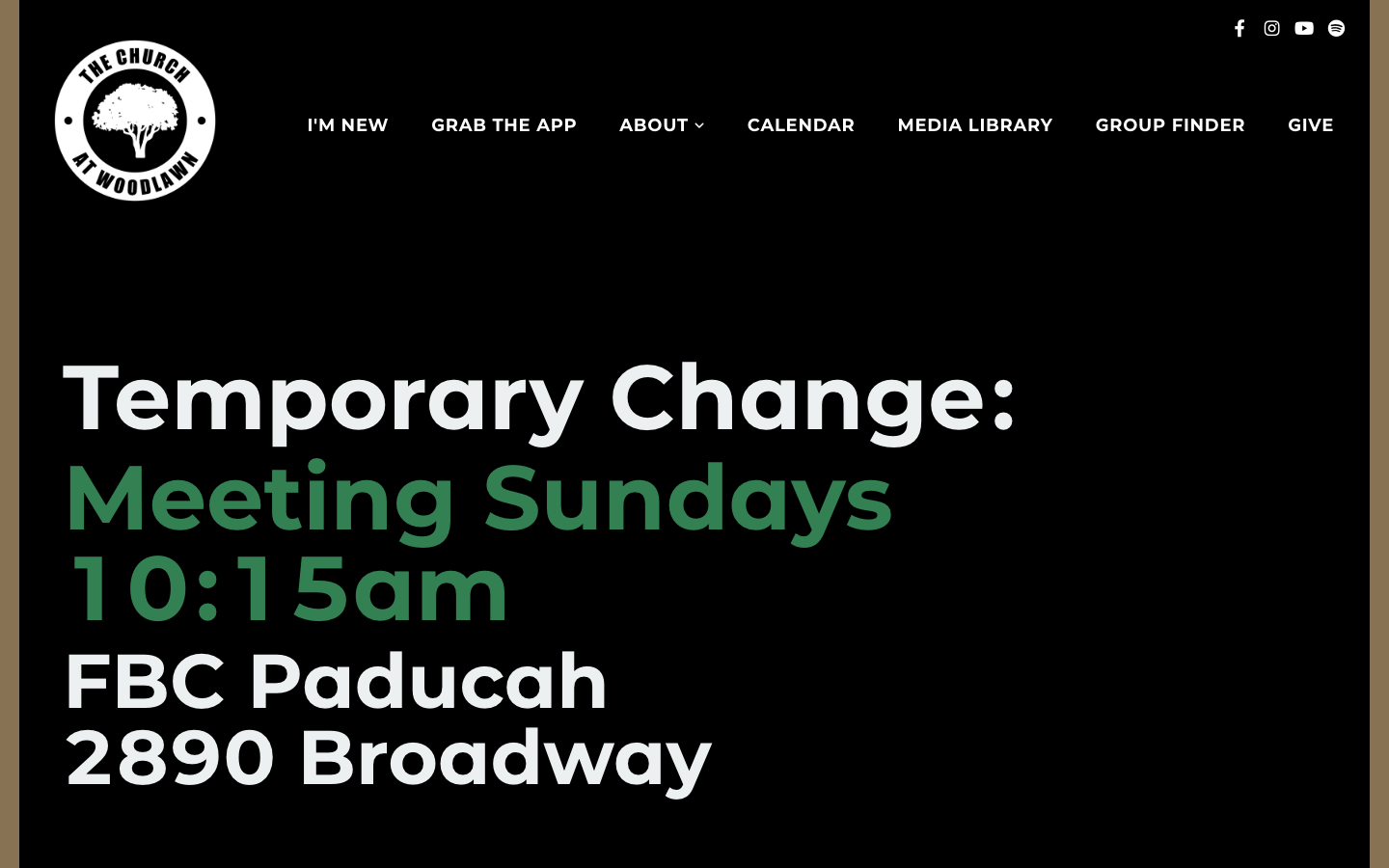
Current ministry context
The church's current public site includes visitor information, an app link, about pages, a calendar, media library, group finder, giving, and temporary meeting information.
The previous app-centered approach also introduced adoption barriers: people could encounter a download, registration, platform, or learning step before reaching the ministry information they needed.
The design question is how to make the church's digital front door lead more naturally to people, relationships, worship, service, and shared church life.
Barriers being addressed
Planned environment
Clear service information, location, beliefs, current events, sermons, giving, and understandable next steps without requiring an app installation.
Planned connections to groups, relevant communication, serving opportunities, and resources while keeping the public front door simple.
Planned role-based groups and permissions, leader communication, volunteer scheduling, and profile relevance for the responsibilities people actually carry.
Planned pathways among sermons, devotionals, events, groups, giving, service, and next steps instead of isolated destinations.
Communication model
Text and email notifications are being considered as restrained invitation layers that bring a person back to a clear web destination. They should be permission-based, relevant, and used only when a timely message helps someone act or participate.
Adoption also requires training, clear ownership, and a system that volunteers and leaders can understand. A useful launch is measured by whether people can complete meaningful ministry tasks, not by downloads alone.
Measurement and stewardship
Planned dashboards would focus on operational questions: whether people can find information, complete a next step, connect with a group, respond to a serving need, or reach the right leader.
Digital data cannot measure spiritual maturity or replace pastoral knowledge. Any future measurement should use consent, transparency, data minimization, appropriate permissions, security, and human oversight.
Project status
The church's existing public website and its current information, media, calendar, group, giving, and app pathways.
The mobile-first web environment, role-aware experiences, connected content paths, leader and volunteer support, notification strategy, training, and meaningful measurement described above.
Contact
If your church has information online but people still struggle to find, understand, or act on it, the $500 Public Pathway Review provides a focused, public-only first step.
Email: infothinklivelove@gmail.com